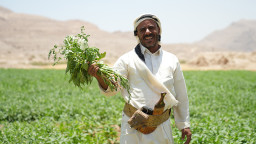
For years, flash floods posed a persistent threat to the lives and livelihoods of residents of Al Musallal Camp in Marib Governorate. Each rainy season, the community’s joy at rainfall turned to fear that floods might sweep away displaced families’ shelters and damage farmland and sources of livelihood.
Abdullah Mohammed, 45, a camp resident who has worked in agriculture for five years, says: “We lived in constant fear and uncertainty. We never expected any farmland to remain after floods came from the direction of Marib Dam.”
He adds: “We cultivated our land, but when floods came from the direction of Marib Dam, they washed away farmland and destroyed irrigation channels, causing us major losses.”
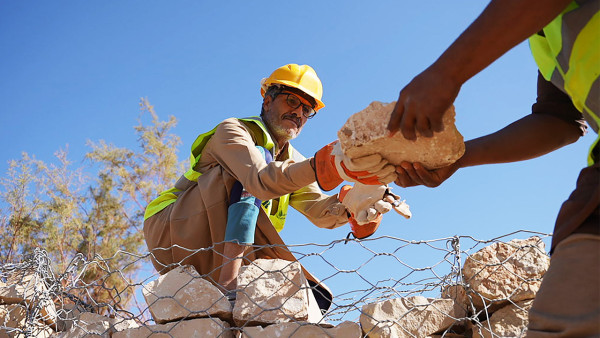
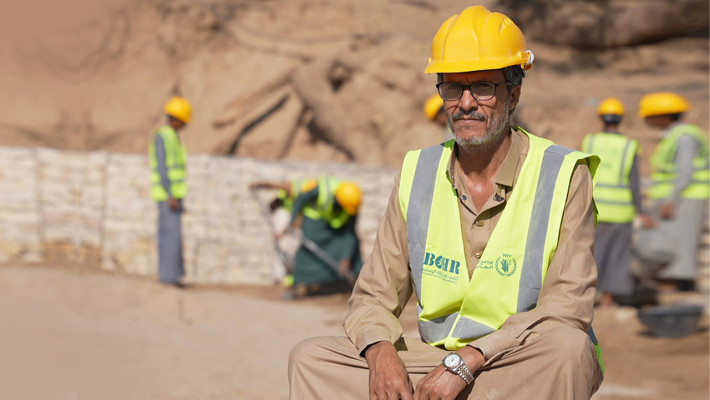
This began to change with the construction of a gabion barrier to protect homes and agricultural land, implemented under the Food Assistance for Assets (FFA) project, funded by the German Federal Ministry for Economic Cooperation and Development (BMZ) in partnership with the World Food Programme (WFP).
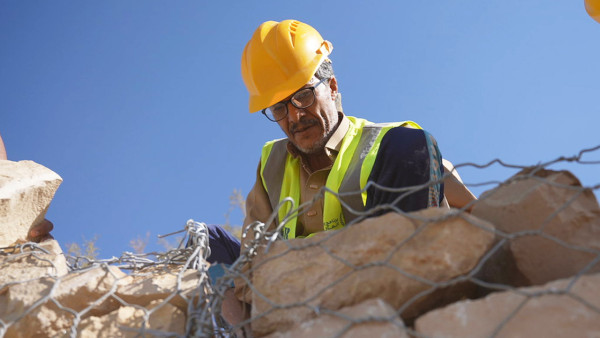
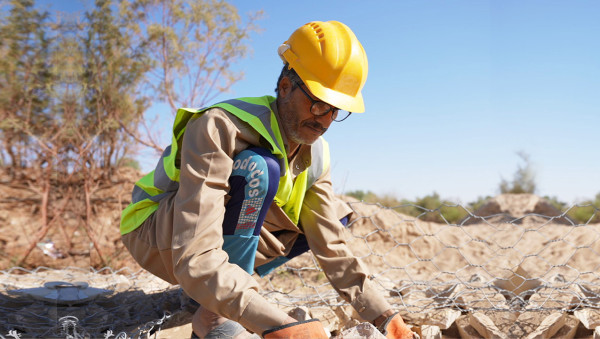
Abdullah was among the local community members who participated in the project. While helping build the barrier, he learned new construction skills, including preparing and tying gabion mesh under the supervision of engineers and the technical team. These skills have given him an additional trade that can provide income in times of emergency and need.
Today, Abdullah and other residents feel safer. The gabion structures have helped protect homes and farmland from floods, reduce the damage and losses that recurred each rainy season, and lower the costs farmers faced in repairing damaged land and irrigation channels.
The latest rainy season tested the effectiveness of the gabion structures. They proved capable of protecting the area, regulating water flow, and reducing flood risks, strengthening the community’s ability to adapt to climate-related hazards while safeguarding local livelihoods.