Years ago, Mithaq was fled from Ibb to Marib due to the war. Upon arrival, she embarked on another difficult journey in search of a dignified life for her family.
In Al-Musallal Camp, Mithaq, 35, endured years marked by hardship, waiting, and deprivation. Days passed as she searched for an opportunity that could restore the most basic elements of a dignified life for her family. “The situation was extremely difficult; I had no work that could provide even our basic needs,” she stated.
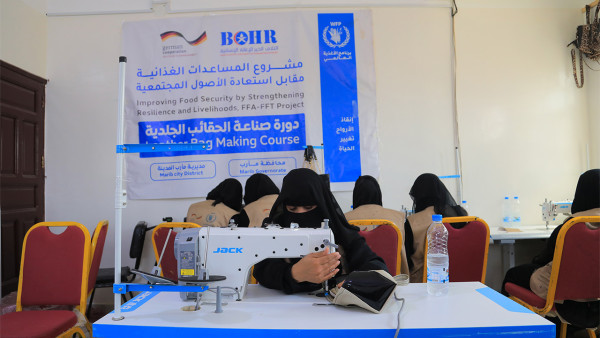
A turning point came when Mithaq enrolled in a leather bag-making training course under the FFA project, funded by BMZ and implemented in partnership with WFP.
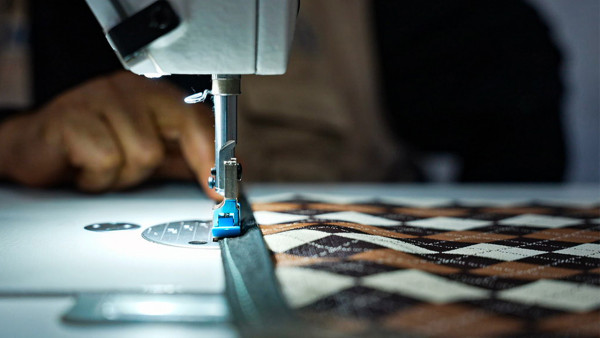
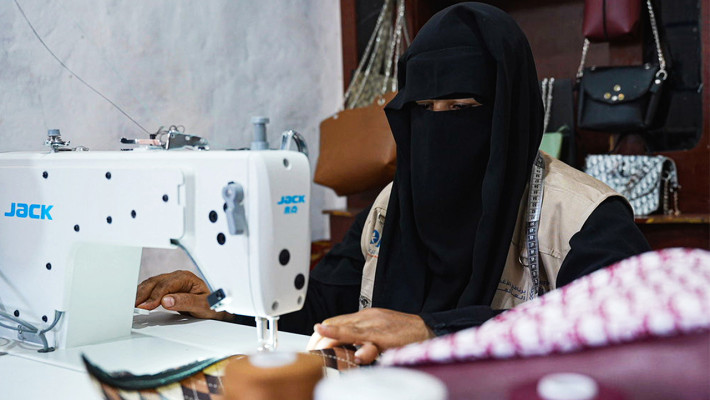
At the outset, Mithaq had no prior knowledge of leather bag sewing, nor of how to operate a sewing machine. Step by step, she began to discover a new skill. She learned basics of the leather bag stitching, structural design, and aesthetic finishing, eventually becoming capable of transforming a simple piece of leather into a well-crafted product with her personal signature on it.
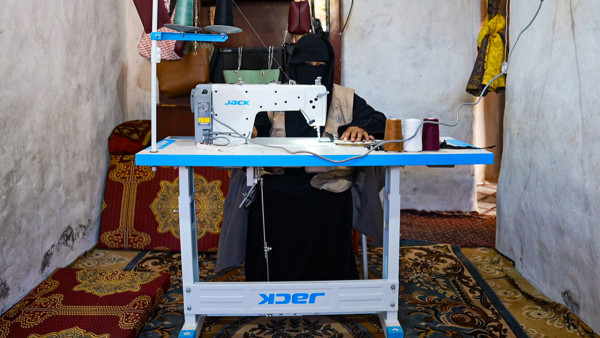
Upon completion of the course, Mithaq received a start-up tools grant, including a sewing machine, materials, and accessories; a grant that marked the beginning of a new phase of self-reliance.
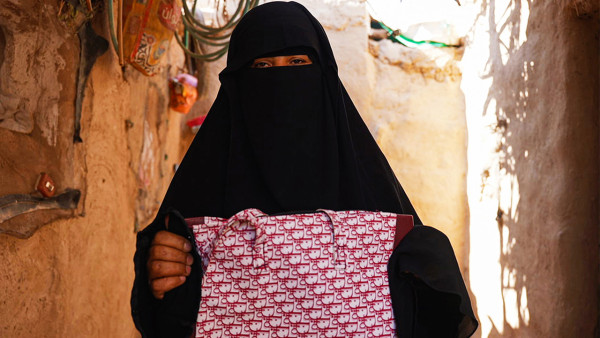
Following the project, Mithaq was able to establish her own small business. She now produces women’s handbags and school backpacks and markets them in the local market. The skill she acquired has become a stable source of income, contributing directly to meeting her family’s needs.
Mithaq is one of 205 young people who received vocational training and start-up toolkits to launch their own businesses and secure sustainable livelihoods, reducing reliance on humanitarian assistance.